
Old Appliances Hauled Away Properly
Appliance Removal in Spokane for replacing failed units and upgrading kitchen equipment
Refrigerators that no longer cool, washers with broken drums, and ovens with faulty heating elements create disposal challenges that standard waste services do not address. When appliances fail or homeowners upgrade to more efficient models, the old units remain in garages, basements, or kitchens until someone arranges removal. Spokane's Junk Removal handles appliance removal for residential and commercial properties, clearing everything from single-unit pickups to complete kitchen appliance sets during remodels.
Appliance removal requires navigating weight and bulk—refrigerators weigh several hundred pounds, commercial-grade units are significantly heavier than residential models, and front-loading washers have unbalanced weight distribution that complicates lifting. The process involves disconnecting units that remain hooked up, maneuvering appliances through doorways without damaging flooring, and ensuring proper disposal for items containing refrigerants or other regulated materials that require specific handling procedures.
Schedule a pickup to remove appliances that delivery crews will not haul away during installations.
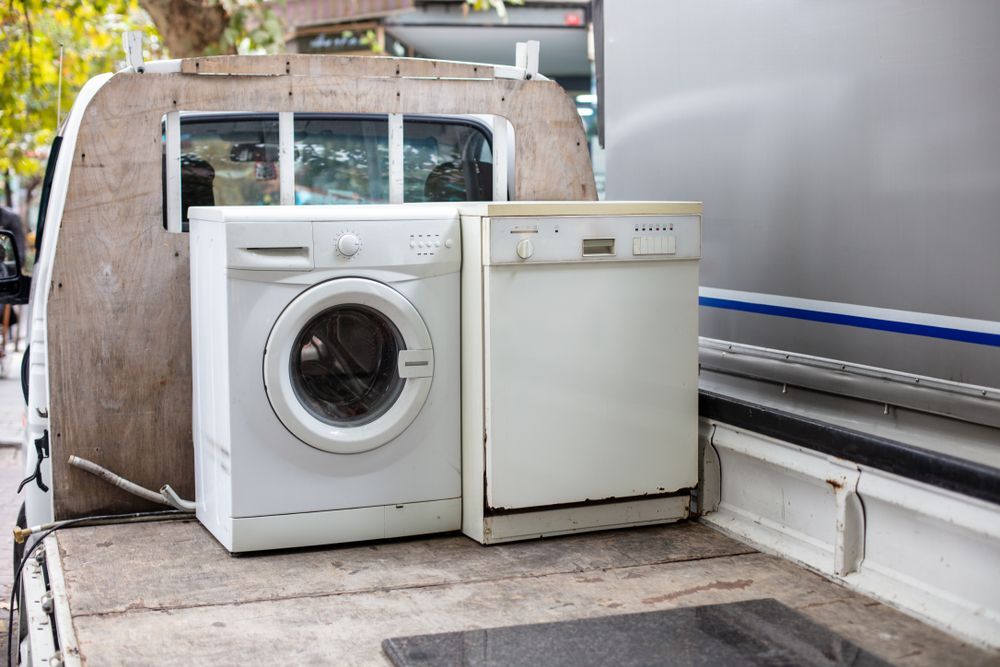
How Appliance Hauling Addresses Disposal Regulations
Appliance hauling involves more than just loading and transport—certain appliances contain materials that require certified disposal processes. Refrigerator removal includes handling units with refrigerants that must be recovered before disposal, while dishwasher removal involves disconnecting water lines and ensuring no leaks occur during extraction. Washer and dryer removal often happens as a pair, with dryers being lighter but bulkier and washers presenting the greater weight challenge due to concrete counterweights used in drum stabilization.
After appliances are removed, installation spaces are ready for new units without the coordination headache of arranging separate disposal during delivery windows. Kitchens and laundry rooms are cleared, old units no longer occupy garage storage space, and homeowners avoid the rental truck and disposal facility fees that come with DIY appliance removal. Commercial appliance removal addresses restaurant equipment, industrial washers, and large-capacity units that property managers need cleared during tenant turnovers or equipment upgrades.
Oven and stove removal requires verifying that gas lines are properly capped or electrical connections are safely terminated before hauling—this coordination happens during the removal visit and does not require separate contractor appointments. General appliance hauling covers the less common items like freezers, trash compactors, water heaters, and HVAC components that homeowners replace but cannot dispose of through municipal pickup services.
Common Appliance Removal Questions
Appliance removal generates questions about preparation, timing, and handling specific unit types. These answers clarify what to expect when scheduling appliance hauling services in Spokane.
What appliances can be removed?
All residential and commercial appliances are removed including refrigerators, freezers, washers, dryers, ovens, stoves, dishwashers, microwaves, water heaters, trash compactors, and commercial kitchen equipment regardless of age or working condition.
Do appliances need to be disconnected before removal?
Appliances do not need to be disconnected beforehand—water lines, gas connections, and electrical cords are handled during the removal process, though gas line capping may require prior coordination with a licensed technician depending on local code requirements.
How are refrigerants handled during refrigerator removal?
Refrigerant recovery is performed according to environmental regulations before disposal, ensuring that units containing coolants are processed through certified facilities—this happens as part of the disposal process and does not require separate homeowner action.
Can commercial-grade appliances be removed?
Yes, commercial appliance removal covers restaurant equipment, industrial washers and dryers, walk-in cooler components, and large-capacity units that exceed residential size and weight—these removals may require additional labor due to the size and extraction complexity.
What happens if an appliance is stuck in a tight space?
Appliances in basements, utility closets, or tight kitchen configurations are maneuvered out using appliance dollies and protective materials to prevent damage to walls and floors—doorways and hallways are measured during the initial assessment to plan extraction routes.
Spokane's Junk Removal coordinates appliance pickup around your schedule and handles all lifting and hauling regardless of appliance size or location within your property. Contact us to arrange removal for appliances that need to be cleared before new installations or during property renovations.